
"A Moment in Time" - By Jen Manning
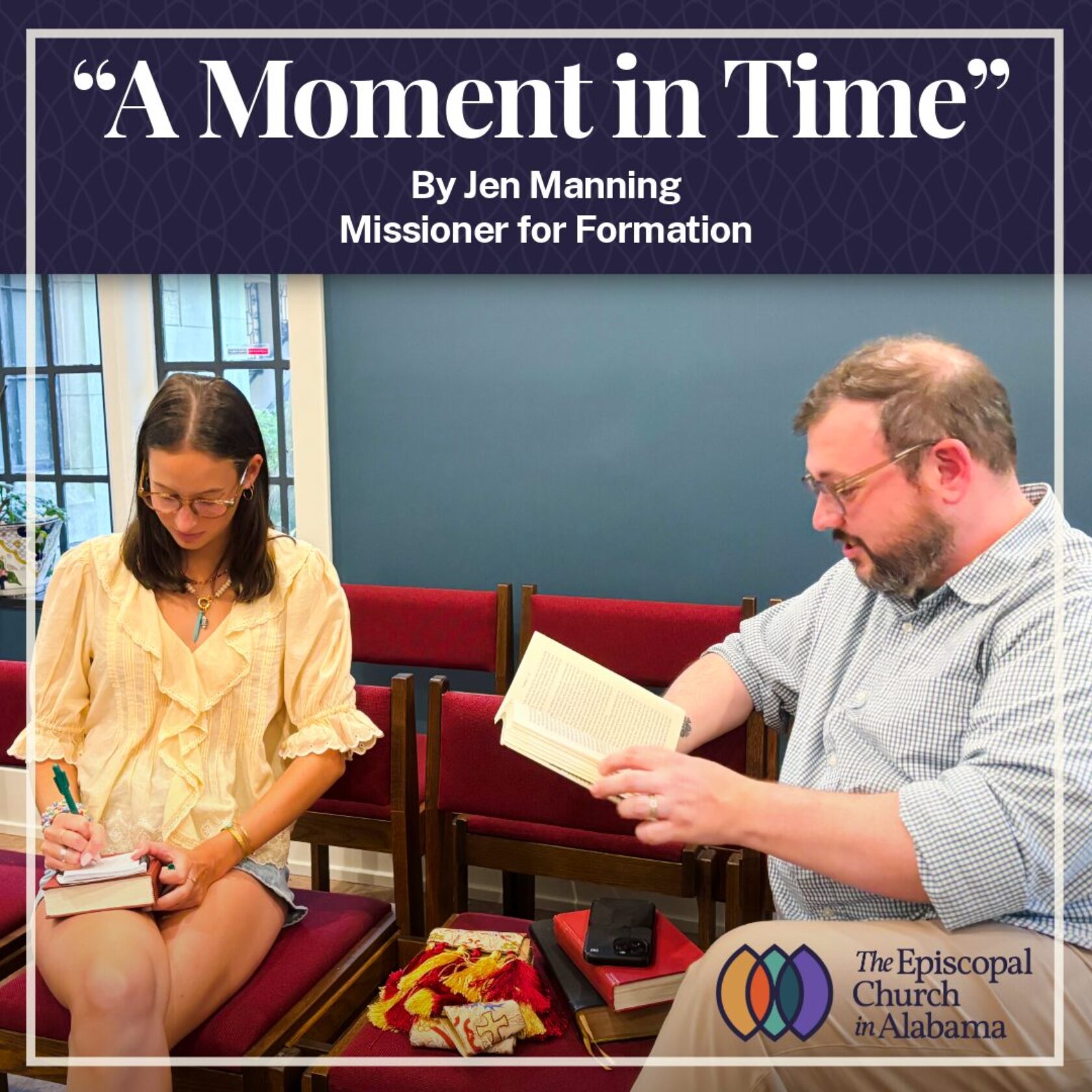
Our summer interns were recently invited to participate in an instructed Eucharist led by the Rev. Dillon Green, rector of St. Catherine’s in Chelsea. Typically, an instructed Eucharist walks us through the sections, words, gestures, and postures of our Sunday worship. We learn where our prayers come from, why we wear certain vestments at certain times, and work to understand the history and meaning behind the things we say and do. It is a formal, participatory way of learning about our worship—and why understanding our liturgy matters.
But Dillon began somewhere else.
He simply asked: “Name a moment in your life when time has stood still.”
The answers ranged from holy moments sitting with loved ones as they passed from this world to the next to gathering around a table in Kenya for hours, sharing stories and breaking bread. As different as the stories were, we quickly recognized something they shared: in each moment, the normal constraints of time had fallen away. No one checked a watch or rushed toward the next thing. We were simply there—present, attentive, and open to the Holy Spirit working within and around us.
Dillon invited us to consider that worship can feel like that every Sunday, if we let it.
We enter church carrying the assumptions, worries, and distractions of our everyday lives. What might happen if, instead, we allowed the Holy Spirit to rework those assumptions as we moved through the liturgy?
Our service engages all our senses and draws us into a moment that somehow holds the past, present, and future at once. Together, we enter the mystery of faith—a moment meant not for performance, but for worship. A moment when, if only for a little while, time can stand still.
Maybe we don’t have to check our watch during worship, wondering if we’ll make it to brunch before the Baptists go up the street. Or let our minds wander into grocery lists or the chores we need to do at home this afternoon. Maybe, for just a little while, we can let the clock fall away. We can set aside our assumptions about one another and the world around us and simply allow ourselves to enter fully into the beauty of our liturgy.
And perhaps, when we do, we discover something profound: worship has the power to transform us. Every time we gather, we are invited to see, hear, taste, touch, and experience the story of Jesus in a new way—and to leave a little more changed than when we arrived.