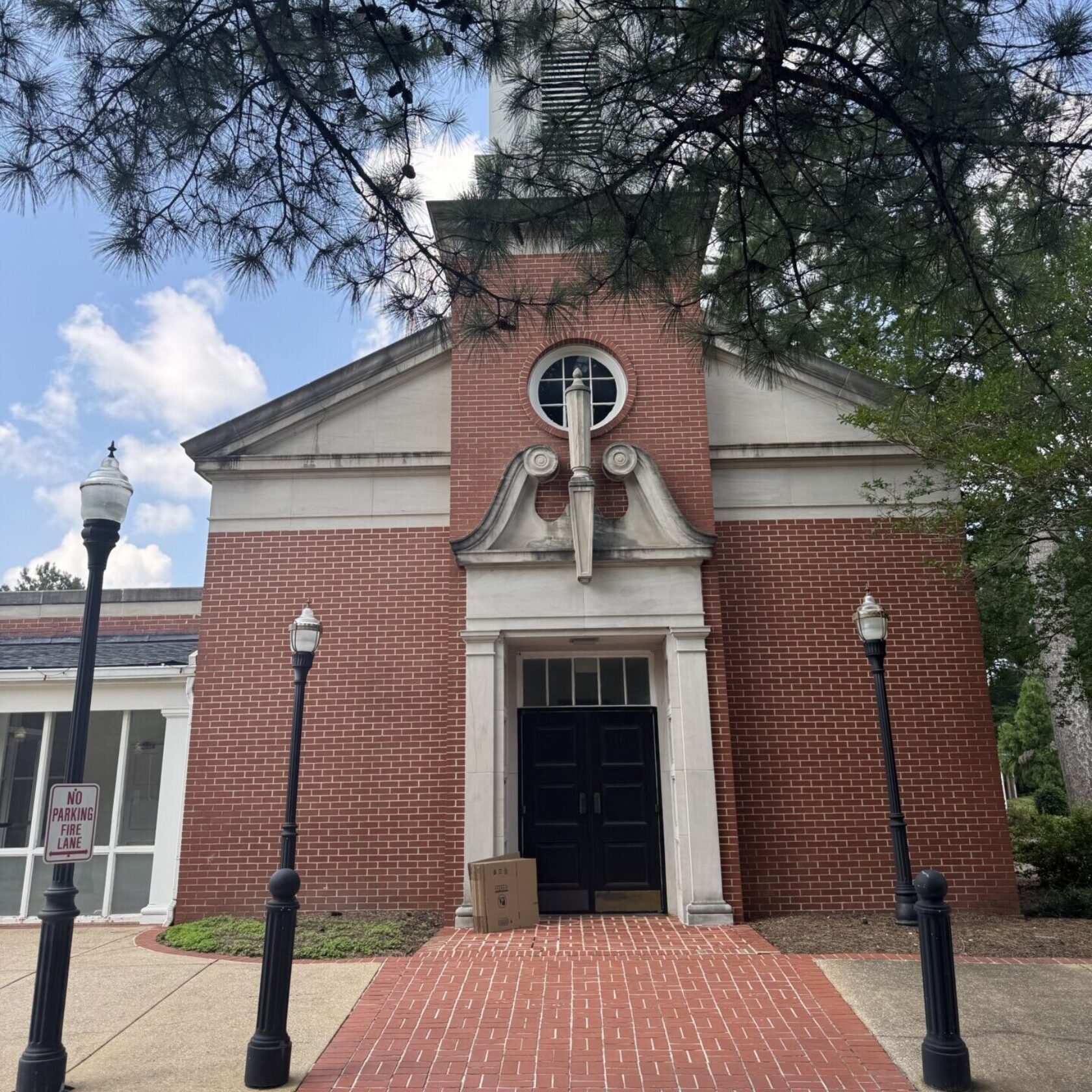
Deconsecrated chapel marks end of an era in ministry to older adults at St. Martin's-in-the-Pines
“The chapel steeple rose high above that eastern end of Birmingham as a witness of Christian love being practiced and lived in that space.”
That is how the Rev. Mary Anne Akin, a former chaplain at St. Martin’s-in-the-Pines, remembers the David Cady Wright Memorial Chapel, where generations of residents of the Birmingham retirement community gathered for worship, prayer, and fellowship, and where clergy and chaplains ministered to older adults across every stage of aging.
Following St. Martin’s-in-the-Pines’ transition from an Episcopal ministry to private ownership, Bishop Glenda Curry deconsecrated the chapel on June 10, marking the end of more than five decades of its ministry as a consecrated worship space within the Episcopal Diocese of Alabama.
Consecrated on Sept. 13, 1973, and dedicated in memory of the Rev. David Cady Wright, founder of St. Martin’s-in-the-Pines and former longtime rector of St. Mary’s-on-the-Highlands in Birmingham, the chapel became the spiritual heart of Alabama’s first large-scale modern residential community designed specifically for older adults. For more than 50 years, it hosted worship services, funerals, memorials, and countless moments of prayer and fellowship for residents, families, staff, and visitors.
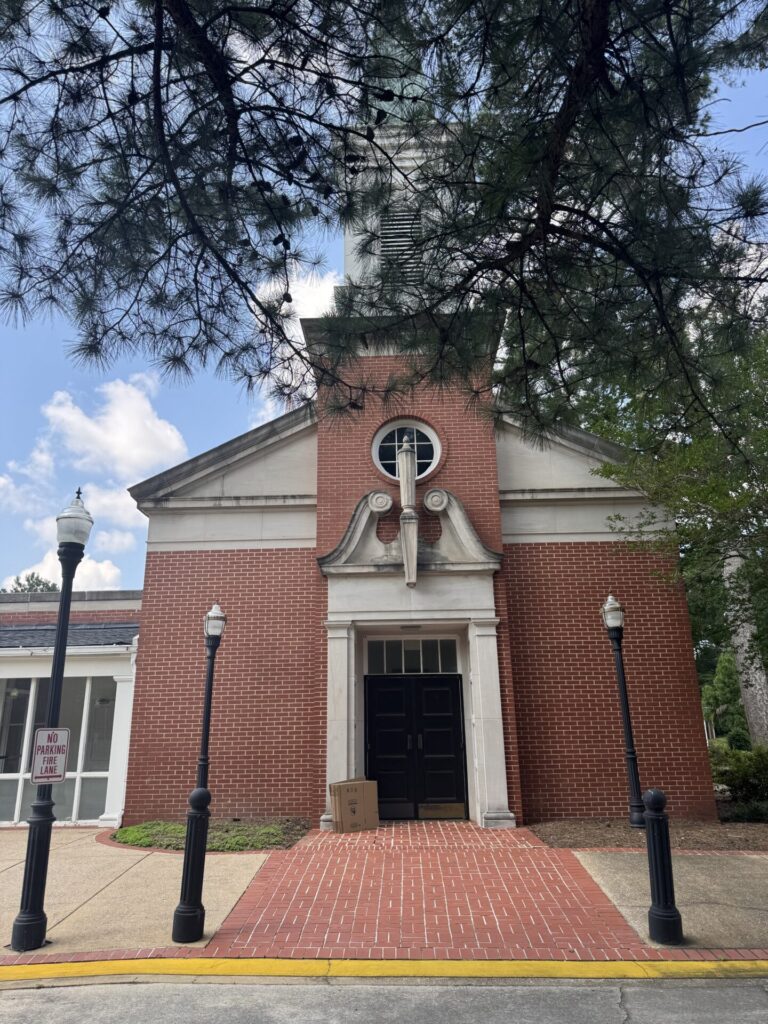
During the deconsecrating service, Curry formally removed the chapel’s consecration and offered thanks for the generations of people whose lives were shaped within its walls.
“I do hereby remove this consecration and do remit this building and all non-sacramental items, for any lawful and reputable use, according to the laws of this land. We give thanks to Almighty God for this outward and visible sign of God’s abundant grace and for all that it has meant to many faithful people during these years,” Curry declared.
Though the chapel’s ministry as a consecrated worship space has ended, many of the items that supported worship there will continue their ministry elsewhere. The chapel’s Bibles, hymnals, and other liturgical furnishings, for instance, will find new homes in Episcopal parishes and ministries across the Diocese of Alabama.
For those who gathered for the final service, including many former chaplains, the liturgy was both an ending and an opportunity to remember the ministry that had flourished within the community.

Hymnals, lectionaries, and other liturgical resources from the David Cady Wright Memorial Chapel are prepared for distribution to Episcopal congregations and ministries across the Diocese of Alabama following the chapel’s deconsecration.
That legacy can be traced to the early 1950s, when Wright, then rector of St. Mary’s-on-the-Highlands in Birmingham, encountered troubling conditions during pastoral visits to nursing homes across the city. Convinced that older adults deserved care marked by dignity, compassion, and community, he began advocating for a new model of care. Though his first proposal failed to gain support, clergy and lay leaders from Episcopal congregations across Jefferson County eventually joined together to establish the Episcopal Foundation of Jefferson County. Their efforts led to the opening of St. Martin’s-in-the-Pines in 1959.
A chapel was a vital part of Wright’s original vision for St. Martin’s-in-the-Pines. However, because federal funds used to construct the retirement community could not be applied to religious facilities, the chapel could not be included in the initial plans. Recognizing that worship and spiritual care were central to Wright’s dream, supporters launched a separate fundraising campaign to build the chapel. Their efforts culminated in 1973 with the consecration of the David Cady Wright Memorial Chapel, which would serve generations of residents, families, staff, and clergy.
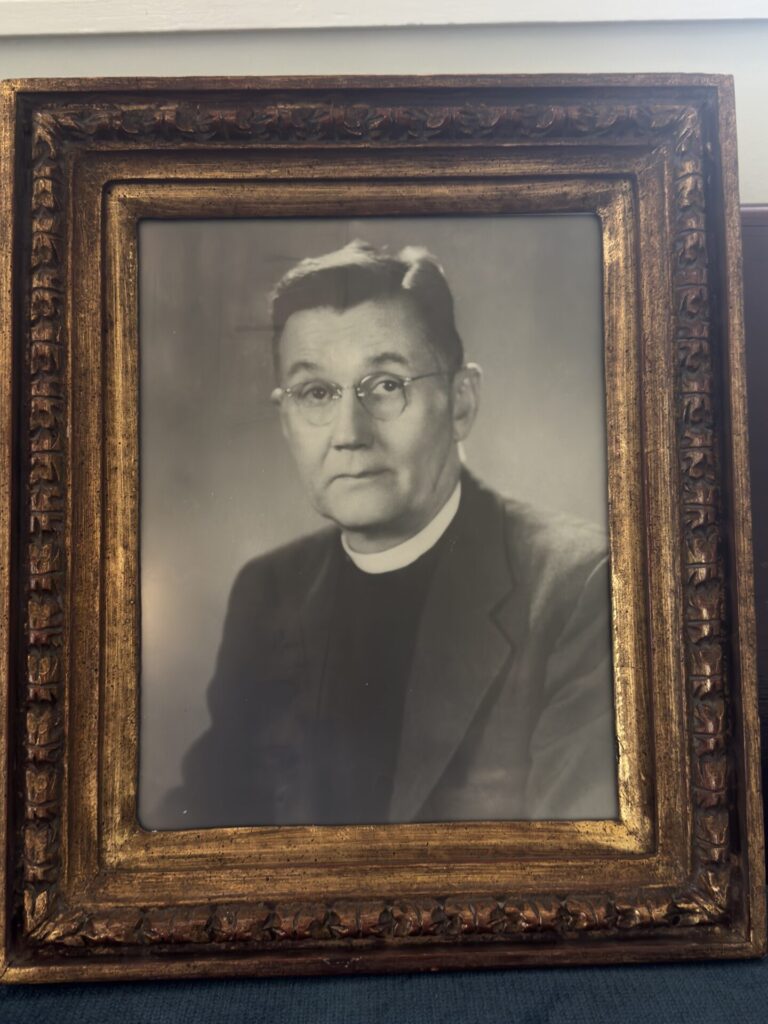
A framed portrait of David Cady Wright, founder of St. Martin’s-in-the-Pines and longtime rector of St. Mary’s-on-the-Highlands, hung inside the Chapel. Wright’s vision for dignified, faith-centered care for older adults helped shape the ministry that has served Birmingham-area seniors for nearly 70 years.
The Rev. Katy Smith, deacon at St. Luke’s Church in Birmingham and a former chaplain at St. Martin’s-in-the-Pines, recalled that for many years priests from Episcopal parishes across the Birmingham area rotated through the community to celebrate the Eucharist each Thursday, helping residents maintain connections with the wider Church.
“The ministry extended beyond Episcopalians. Full-time chaplains provided care to residents from a variety of faith traditions, while worship services were held throughout the community each week,” Smith said.
In addition to the David Cady Wright Memorial Chapel, two smaller chapels were later consecrated by Bishop Henry Parsley, the 10th Bishop of Alabama, in Assisted Living and the Arbors communities, expanding opportunities for worship and pastoral care for residents with different care needs across the campus.
Akin recalled efforts to ensure residents could continue to participate fully in worship as they aged. During her tenure, improvements were made to the chapel, including enhanced lighting and seating arrangements that better accommodated residents using wheelchairs and walkers. Reflecting on her years of ministry at St. Martin’s, Akin said the community deepened her appreciation for the wisdom and gifts older adults offer to the Church and society. “We stand on their shoulders,” she said.
For the Rev. Jennifer Riddle, rector of St. Simon Peter Church in Pell City and former chaplain and director of pastoral care at St. Martin’s-in-the-Pines, the ministry was defined by the relationships formed among residents, families, and staff.
“St. Martin’s was a place of hope, healing, and community,” Riddle said. “St. Martin’s truly embodied the kingdom of God.”
Riddle served at St. Martin’s for 13 years. Though she presided over countless funerals and walked alongside residents and families through grief and loss, particularly during the COVID-19 pandemic, she said the community was equally marked by joy, laughter, and deep human connection.
“I give thanks to God for the people who called St. Martin’s home and for allowing me to be a part of their lives,” she said. “I will forever be grateful for the impact they made on my life and ministry.”
The writer is the Director of Communications. She can be reached at nana@dioala.org.