One Book at a Time: How ‘Monday School at All Saints Church is Walking the Road of Racial Healing
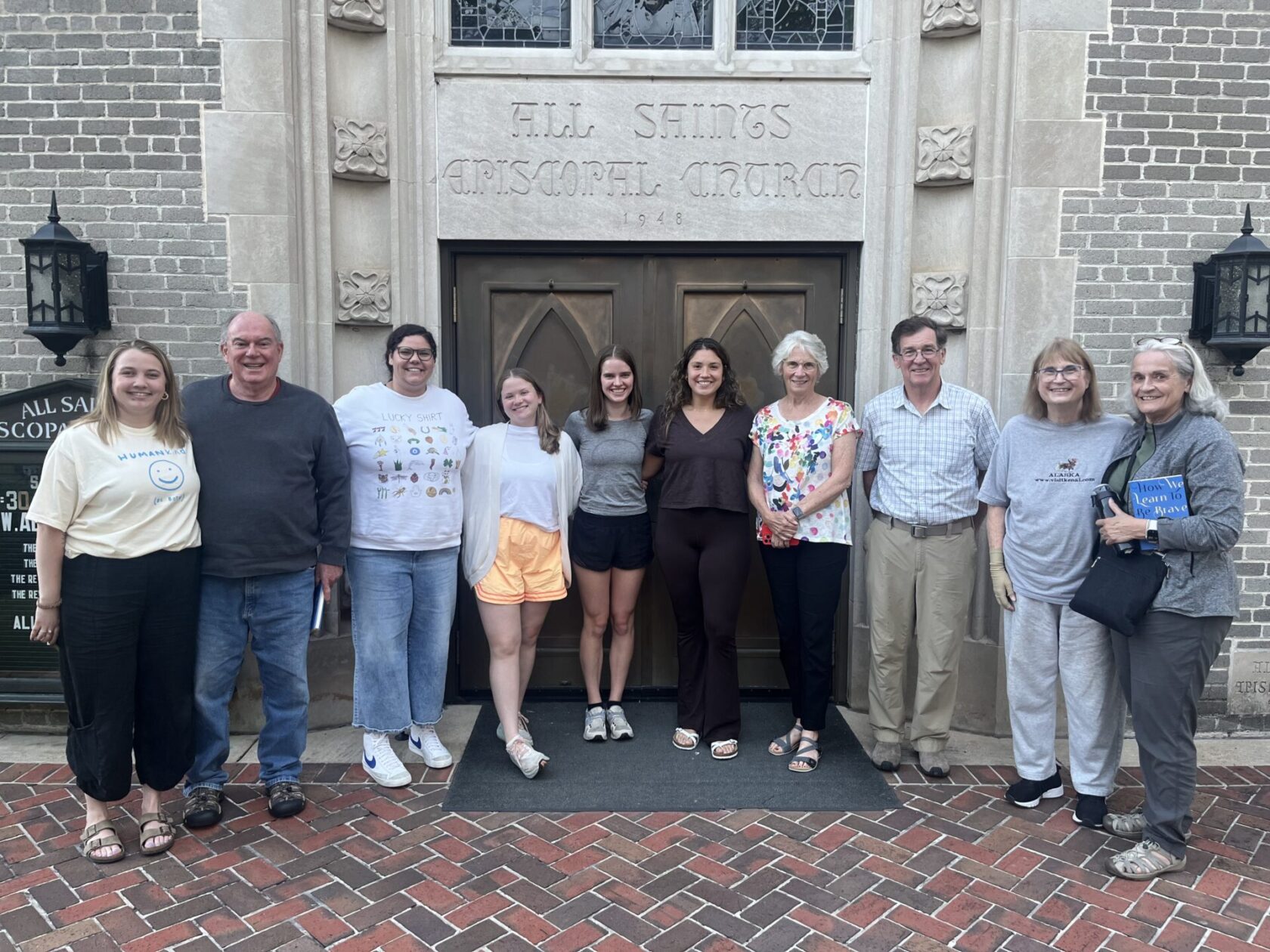
In a quiet corner of All Saints Church in Homewood, something sacred is unfolding every Monday evening. A group of people spanning three generations gathers to read, reflect, and talk candidly about race, faith, and justice, quietly becoming a beacon of hope. They call it “Monday School.”
When the Sacred Ground series concluded in 2024, Memily Colvin was not ready for the conversation to end. Deeply moved by the experience, she was inspired to keep the momentum going. Then came a recommendation from Bishop Curry, as part of the “One Diocese, One Book” initiative: The Night is Long but Light Comes in the Morning: Meditations for Racial Healing by Dr. Catherine Meeks. Memily rallied a small group to start a book discussion on Tuesday nights. To her surprise, 10 to 12 people showed up, some from other denominations. Something had taken root.
“When the Commission for Racial Healing and Pilgrimage launched our first ‘One Diocese, One Book’ initiative studying Dr. Catherine Meeks’ book, we hoped it would inspire continued engagement in our parishes,” said the Missioner for Racial Healing and Pilgrimage, Breanna Carter. “Monday School is the kind of faithful response we prayed for.”
That initial success led to more. The group reconvened in the summer, this time during Sunday School hour. Attendance dipped due to scheduling conflicts, especially with members from outside churches. Then, during Advent, they tried again on Monday nights. The first meeting fell during Thanksgiving week, drawing only three participants. But the following week, there were 14 people. A new rhythm was born. Thus, “Monday School” began.
“It rhymes with Sunday School,” laughed Karen Ammons, who also sings in the choir and cannot attend traditional classes on Sundays. “Monday School gave us a new way to gather. It just made sense for people who wanted to be there but could not make it on Sundays.”
Over time, Monday School has grown into a faithful and diverse group of readers and thinkers who are no strangers to difficult truths. Each meeting cracks open hard conversations and unearths uncomfortable questions. The books they choose are not light reading. They include Jesus and the Disinherited by Howard Thurman, “Letter from Birmingham Jail” by the Rev. Dr. Martin Luther King Jr., and The Church Cracked Open by Stephanie Spellers. Each one delves deeply into America’s racial legacy and the Church’s role in addressing it.
“I told everybody, if we do not read Jesus and the Disinherited book, we are not doing this right,” Memily insisted. She was drawn to Thurman’s theological depth and the historical connection to the Rev. Dr. Martin Luther King Jr. For her, reading Thurman provided a foundation for understanding why faith communities must engage in racial justice. She said, “We are not here to fix everything overnight. But we are here, together. Reading, learning, wrestling. That’s how healing begins.”
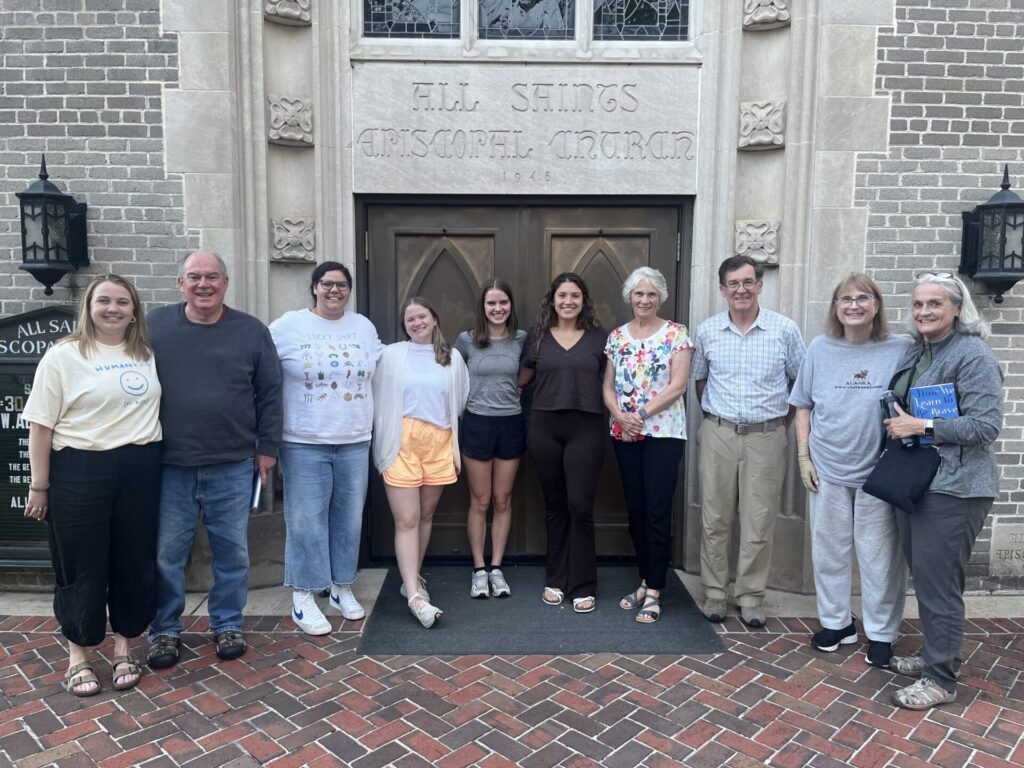
A group photo of some members of Monday School (L-R: Abby Poole, Ton Richeson, Grace Turner, Carrie Dennis, Magie Logan, Taylor Gerard, Memily Colvin, David Walters, Karen Ammons, Michelle Suttle)
Karen reflected on how the readings pushed her thinking: “I told one of my friends of color what we were reading, which was Jesus and the Disinherited, at the time; she said, ‘We [people of color] have always been the disinherited.’ That stuck with me. I had never thought of it like that before.”
But Monday School is not just about books. It is about the conversations they spark and what happens next. Members talk about difficult issues, reflect on their lives, and most importantly, they take action.
“Sometimes we come in and talk about things we have done during the week,” said Abby Poole. “Hard conversations we have had, moments we are proud of. It is a place where different opinions are welcome, and no one gets mad. We just stop and really listen.”
That spirit of listening has made a lasting impact. For Taylor Gerard, Monday School was her path back to church. “When Abby brought me, it was just such an amazing experience. I realized this was a safe space to talk about race, faith, and the world. It made me want to come to church again.”
Even in its simplicity, Monday School has become a powerful community. Memily noted, “I am amazed at how many people here want to have racial conversations.”
The group spans multiple generations. Younger and older members bring different life experiences and questions to the table. “We each offer our own perspective,” Karen said. “It makes the conversations richer.” Tom Richeson also emphasized this: “At the end of the day, it is about listening more than talking. We learn best when we open our hearts, not just our minds.”
Selecting the next book is part strategy, part serendipity. While Memily often curates the list, they also receive suggestions from Bishop Curry and the national Church. But, as she admits, “We do not really have a set criterion. We are figuring it out as we go.”
Yet, the outcomes speak for themselves. Members have built relationships across racial and generational lines. They have become more active in their communities. Carrie Dennis shares articles regularly to prompt discussion. “It is like my form of shopping,” she joked. Grace Turner took a multigenerational group to a museum as part of her youth ministry work. Karen now wants to gain a deeper understanding of LGBTQ+ issues. Tom reminded the group, “People are people, and Jesus makes that clear. That is what keeps me grounded in all these conversations.”
“It is deeply encouraging to see that participants are not only reading and having meaningful conversations,” Breanna reflected, “but also living out their faith in transformative ways—both within the parish and across the diocese.”
Asked what keeps Monday School going, Memily responded, “It is a safe space, and there is no rigid curriculum. We are all just trying to learn together.”
In Abby’s words, the heart of it is this: “I hope we keep doing this no matter the number of people that show up. Maybe others will look up to us and be inspired. We can be an example, an inspiration, and help solidify the Diocese’s commitment to racial healing. We need to make the most of all the resources made available to us. Whoever comes, regardless of their race or background, is welcome here.”
Their advice for anyone thinking of starting a similar group? “Start with open-minded people,” the group said. “People who are willing to learn, to listen, and to check in with each other. That is where the real transformation begins.”
“From serving with Sawyerville Person2Person to organizing a parish pilgrimage that spans generations,” Breanna reflected, “Monday School is a beautiful witness to what it means to put faith in action and pursue racial healing in our diocese and beyond the walls of the Church.”
Although the group is uncertain about how and where this will lead, they remain faithful and aim to continue growing and influencing their parish and community with support from clergy and the diocese, one book at a time.
The writer is the Director of Communications. She can be reached at nana@dioala.org