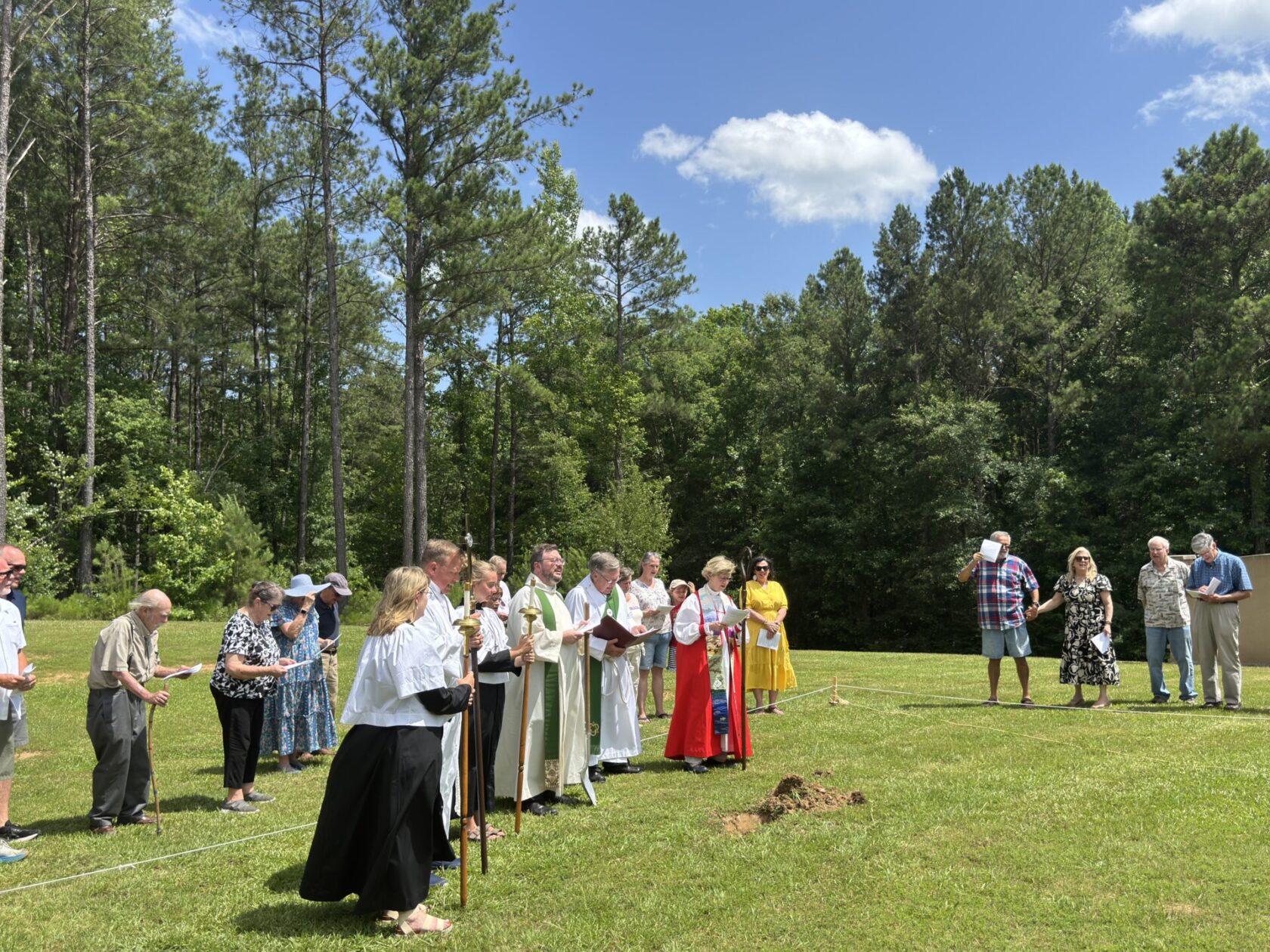
St. Catherine’s Church breaks ground for first permanent worship space in parish history
St. Catherine’s Church in Chelsea, AL, broke ground on June 14—the Third Sunday after Pentecost—for its first permanent church building after nearly two decades of worshiping in borrowed and temporary spaces.
Construction on the church is expected to begin in July and will take about eight months to complete. When finished, it will become the first permanent brick-and-mortar worship space owned by the parish since its founding in 2007.
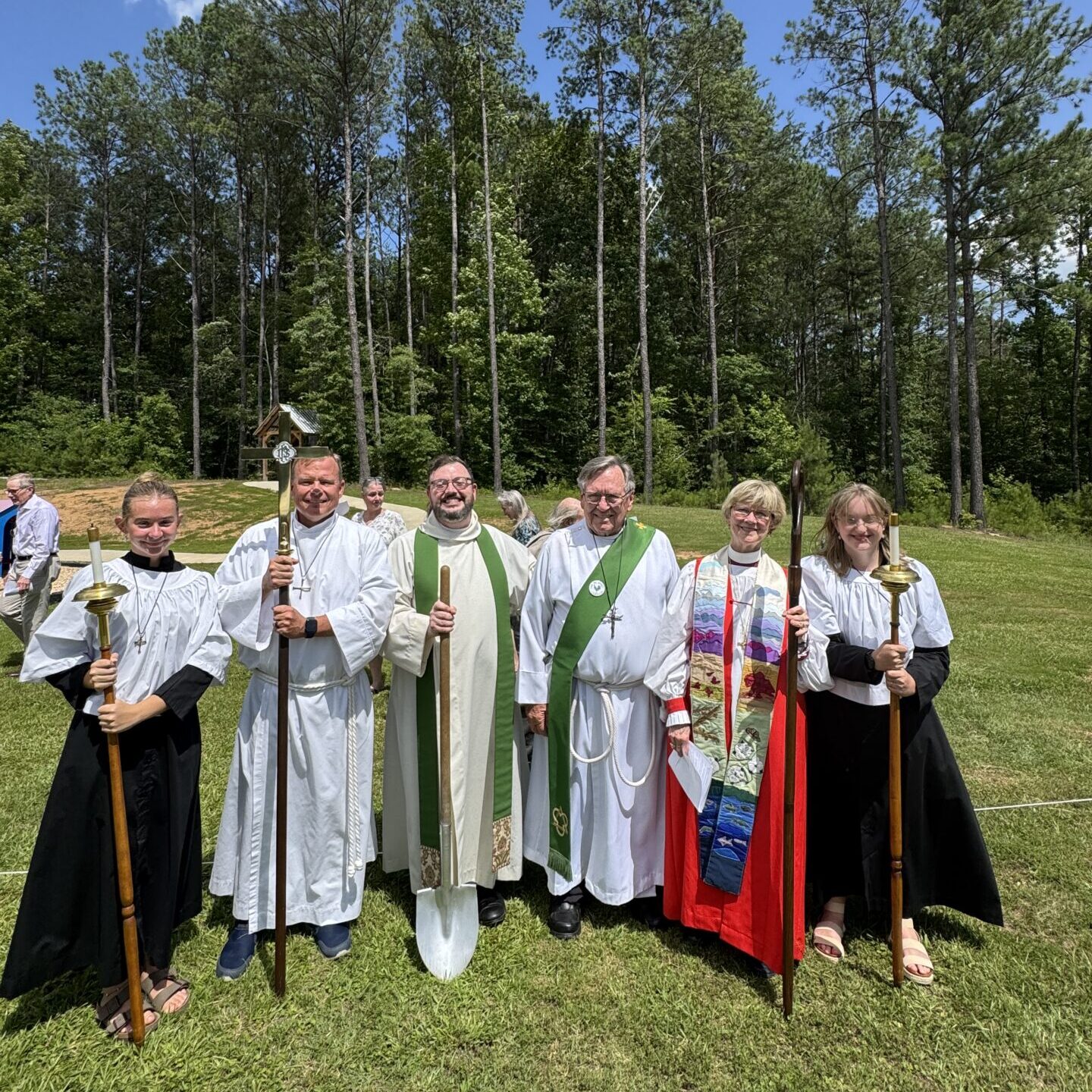
Several clergy members and dozens of parishioners gathered on the church’s campus on King’s Home Road for the liturgical groundbreaking ceremony, celebrating the culmination of years of fundraising, planning and prayer. The new building will stand on a 20-acre property owned by the Diocese of Alabama, where St. Catherine’s has worshiped in temporary structures donated by Asbury Methodist Church in 2017.
The parish now averages 40 worshippers each Sunday and has outgrown its temporary worship space. Church leaders say the new nave will give the growing congregation room to expand its ministries and welcome more worshippers.
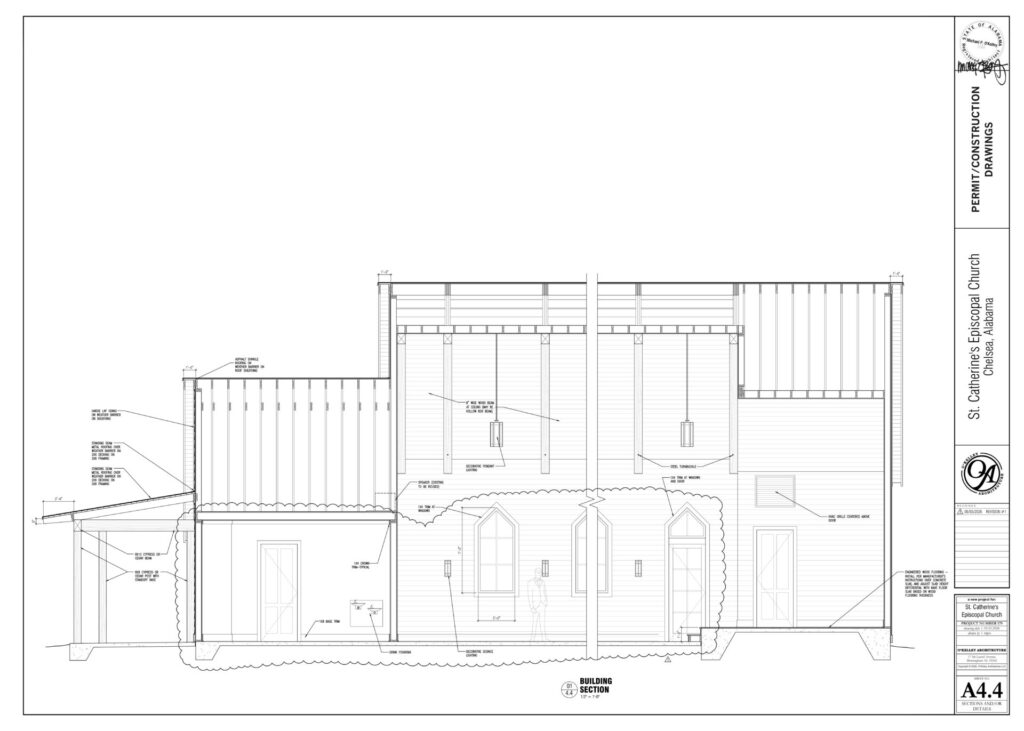
The 2,555-square-foot church will accommodate up to 150 people, including seating for 135 in the nave. The traditional design features a steeply pitched roof, pointed-arch windows reminiscent of traditional church architecture, and a large floor-to-ceiling window behind the altar that frames views of the surrounding woods and brings the natural landscape into the worship space.
For many parishioners, one of the project’s most significant achievements is that it will be built debt-free. Chris Stricklin, head of St. Catherine’s Building Committee and senior warden when the parish first began envisioning a permanent church, said the congregation established a building fund about three years ago and began working with diocesan leadership to make the project a reality. The fund grew through generous parishioner donations, memorial gifts, and a $150,000 contribution from the Diocese of Alabama, enabling the parish to raise the $900,000 needed for construction without financing.
“We wanted to create something that parishioners would be proud of not only today, but 30 years from now,” Stricklin said, while also ensuring the project remained financially responsible.
Drawing a parallel to Jacob’s dream described in Genesis 28:10-17, Bishop Glenda Curry, who officiated the ceremony, used the biblical story to frame the congregation’s journey from a fledgling worshiping community to a parish preparing to build its first permanent church.
“Since 2007, this community has come together based on prayers and dreams beyond anyone’s expectations, and look what you have done,” Curry remarked. “You have come to the place where you are ready to make exactly what Jacob did, a place that will be a gate from earth to heaven and that is filled with the goodness of God that will be a symbol to everybody riding down this road, that this is God’s land, God’s place, God’s earth, and that you are servants.”
She continued: “This is the house of God and the gate of heaven.”
For the Rev. Dillon Green, rector of St. Catherine’s, the new church will provide more room for parish life while creating a more visible presence in the community, helping welcome newcomers and serving as a lasting witness to the Episcopal Church in Chelsea.
“The location itself is beautiful, surrounded by God’s creation, and it will be more visible from the road,” he said. “As we often say, we worship the Lord in the beauty of holiness. This gives us an opportunity to build a structure that reflects what we value and love about the Episcopal Church—a place shaped by intention, thought, prayer, tradition, beauty and goodness.”
Green said he hopes the new church will serve as a visible reminder of the parish’s presence in Chelsea and invite newcomers to explore the congregation.
Founded by a group of Episcopalians, St. Catherine’s began as a monthly Bible study as part of the Diocese of Alabama’s Decade of Evangelism program, which sought to start a new church every three years. The young congregation soon found a temporary home in a vacant 75-year-old Church of God building that had sat unused for more than a decade. After extensive cleaning and repairs, members painted the church’s front door red and held their first Sunday worship service on Feb. 3, 2008. Later that month, the Diocese formally recognized St. Catherine’s as a worshiping community at the Diocesan Convention.
As the parish grew, volunteers converted an abandoned trailer into ministry space before church leaders turned their attention to the King’s Home Road property. Two temporary buildings donated by Asbury Methodist Church were later moved to the site and renovated to serve as a worship space, classrooms, offices, a nursery, and other ministries. The congregation continues to worship in those buildings today.
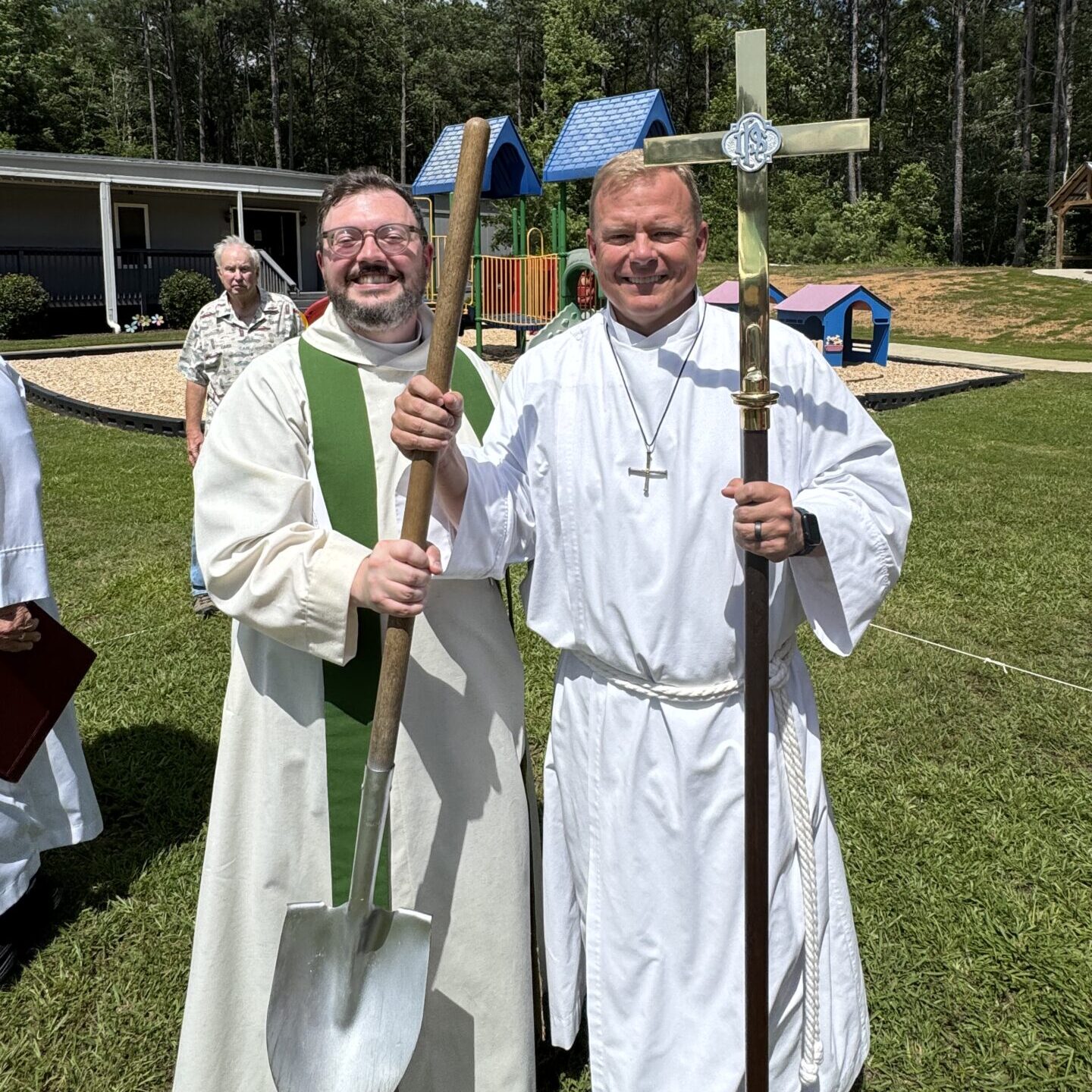
Looking back on Sunday’s ceremony, Green said he was mindful of the generations of parishioners whose prayers, sacrifices and generosity helped bring the project to fruition.
“It was incredibly meaningful,” he said. “I feel very honored and blessed to have been part of this project and to have been invited to help bring it to life. I could feel the presence of those who have been here, as well as those who have gone on to be with the Lord. Their prayers, sacrifices, and love helped make this possible. In many ways, it felt like they were still present with us, sharing in the joy of seeing this vision become a reality.”
The writer is the Director of Communications. She can be reached at nana@dioala.org